I remember a friend once asked me, “How do I know if the kojic acid soap I bought is okay for my sensitive skin?”
It’s a great question because not all kojic acid soaps are made the same.
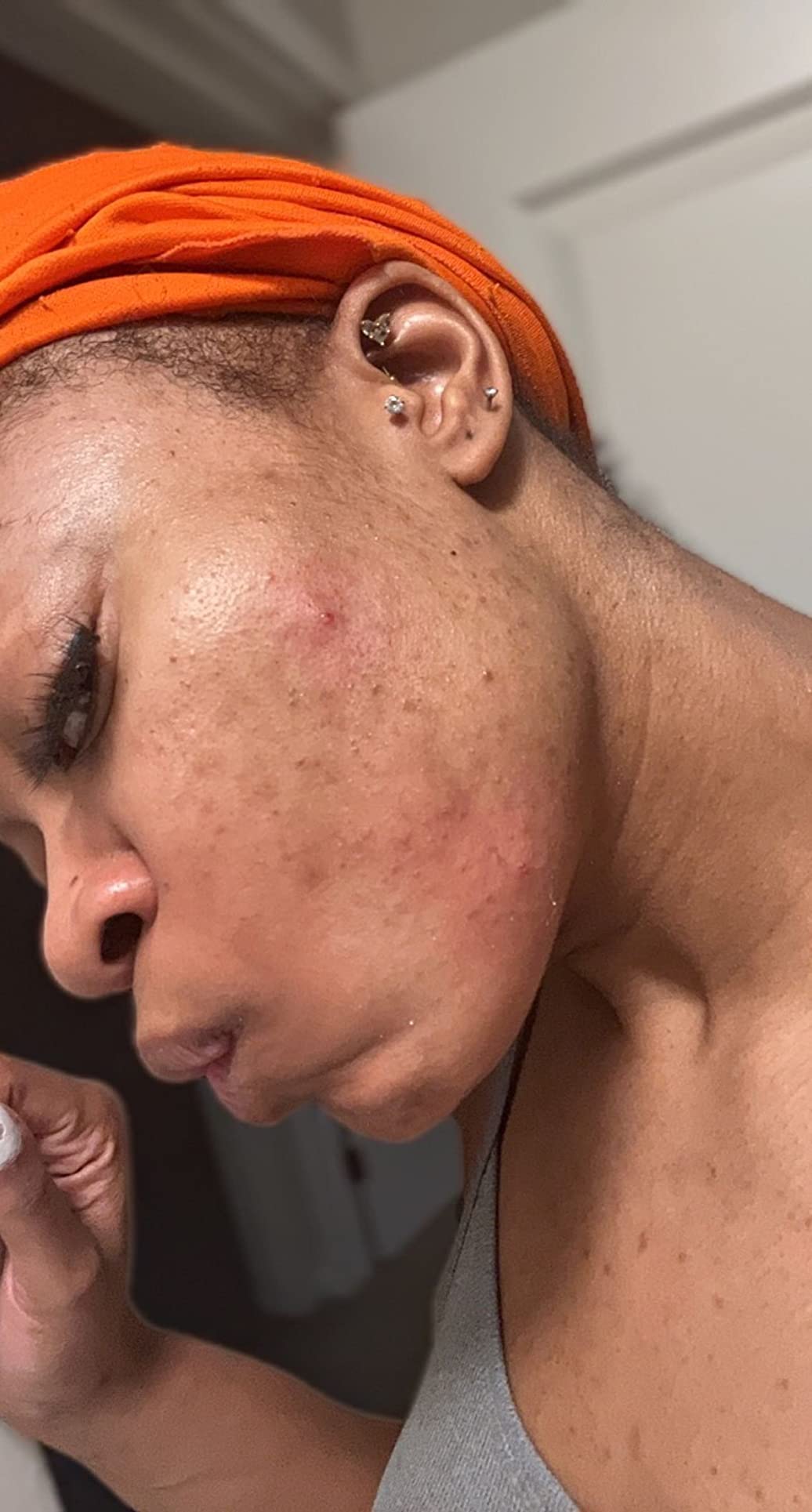
Some formulas can brighten dark spots gently, while others can trigger redness, breakouts, or make sensitive skin worse.
The truth is, sensitive skin requires more careful product selection.
It isn’t enough to just buy the first kojic acid soap you see online.
You have to dig deeper into the ingredient list and look for signs that the formula is truly safe for your skin type.
So let’s talk about exactly what to look for.
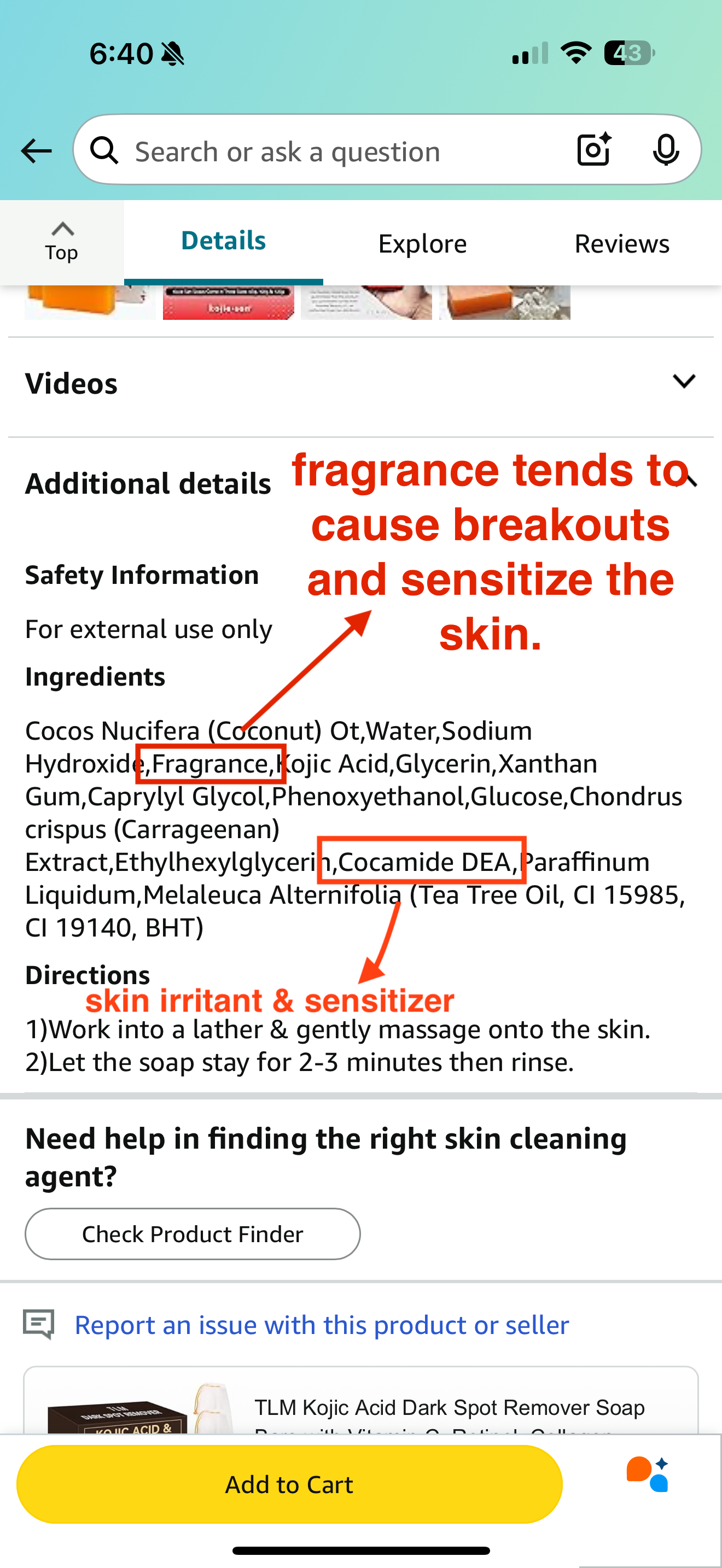
1. The first thing you need to check for is fragrance.
Fragrance might seem harmless—it smells nice, it makes skincare feel luxurious—but for sensitive skin, it’s one of the biggest triggers for irritation.
Even if you don’t notice it right away, over time fragrance can sensitize the skin, leading to more frequent breakouts and flare-ups.
If you turn the box around and see “fragrance” or “parfum” on the label, that’s a red flag.
Sensitive skin does best with products that are fragrance-free, even if that means sacrificing a nice scent.

2. The second ingredient to watch out for is artificial colorants.
Most kojic acid soaps you see on the market have a bright orange color.
Here’s the secret: kojic acid itself is not orange.
That color almost always comes from synthetic dyes.
Artificial colorants may make the soap look attractive, but they can wreak havoc on sensitive skin.
They often clog pores, trigger allergic reactions, and can cause irritation that leads to more breakouts.
If you see “FD&C” or “CI” followed by numbers in the ingredients list, it means artificial dyes are present.
A better choice is a kojic acid soap that is naturally tinted or even completely color-free.

3. The third factor you need to check is whether the soap is cocamide-DEA free.
Cocamide-DEA is often added to soaps to give them more foam and a creamy feel.
But for sensitive skin, it’s another irritant you don’t want.
It has been linked to redness, dryness, and allergic reactions.
When you’re already dealing with sensitive skin, the last thing you need is a foaming agent making things worse.
So if you see cocamide-DEA listed, that’s another reason to skip that soap.

Now, let’s put all of this together.
Look for these instead:
1. Look for a short, simple ingredient list.
A good formula highlights kojic acid as the active ingredient, paired with a gentle base like coconut oil, olive oil, or glycerin.
These natural bases not only support the brightening benefits of kojic acid but also help maintain skin hydration and barrier strength.
The fewer unnecessary additives, the safer the soap will be for your skin.

2. Use a kojic acid face wash instead.
Unlike bar soaps, which typically have a high pH around 9, liquid cleansers can be formulated closer to the skin’s natural pH, making them much gentler.
That means less risk of breakouts, dryness, or irritation—while still giving you the brightening benefits of kojic acid.
So if bar soaps keep giving your skin trouble, consider switching to a facial wash with kojic acid that’s designed for sensitive skin.
It’s a smarter, safer way to enjoy the glow without the irritation or breakouts.
The information listed on this article is just a guideline.
Disclaimers:
- Everyone’s skin is different so if you feel like trying a kojic soap that has the ingredients I mentioned above, then go ahead. Just be mindful on how it reacts with you skin. If irritation occurs, then stop using it.
- I’m the founder of meeven – I created the kojic acid turmeric soap fragrance-free, dea-free and colorant-free kojic soap for people with sensitive skin like me.


Leave a Reply