I once got a text from a friend asking: does turmeric soap help with acne or will it make it worse?
It’s a great question, because turmeric has been used in beauty rituals for centuries, but when you put it into a soap, the story gets more complicated.
Turmeric, as an ingredient, has earned its reputation in skincare for good reason.
It contains curcumin, a powerful compound that gives turmeric its golden color and many of its skin-loving benefits.
When it comes to acne, there are three main ways turmeric can make a difference.
Why you should use it:
- First, turmeric is naturally anti-inflammatory.
If you’ve ever dealt with red, swollen breakouts, you know how painful and frustrating they can be.
The curcumin in turmeric helps calm down inflammation, reducing redness and irritation.
This can make pimples appear smaller and less angry, which is a huge relief for anyone battling persistent flare-ups.
2. Second, turmeric is antibacterial.
Acne is often driven by bacteria, specifically Cutibacterium acnes, which thrives inside clogged pores.
By reducing the growth of acne-causing bacteria, turmeric can help prevent new breakouts from forming.
It’s almost like giving your skin a natural shield against one of acne’s root causes.
3. Third, turmeric has been shown to help with oil control.
Excess sebum is one of the biggest triggers for clogged pores and breakouts.
For people with oily or combination skin, turmeric can help regulate that oil production so the skin feels more balanced.
Less oil means fewer opportunities for pores to get clogged, which ultimately reduces the frequency of acne.
So on paper, turmeric sounds like a skincare superhero.
Anti-inflammatory, antibacterial, and oil-regulating—it checks off all the boxes you’d want in an acne treatment.
This is why turmeric soap has become so popular in recent years, especially among people looking for natural alternatives.
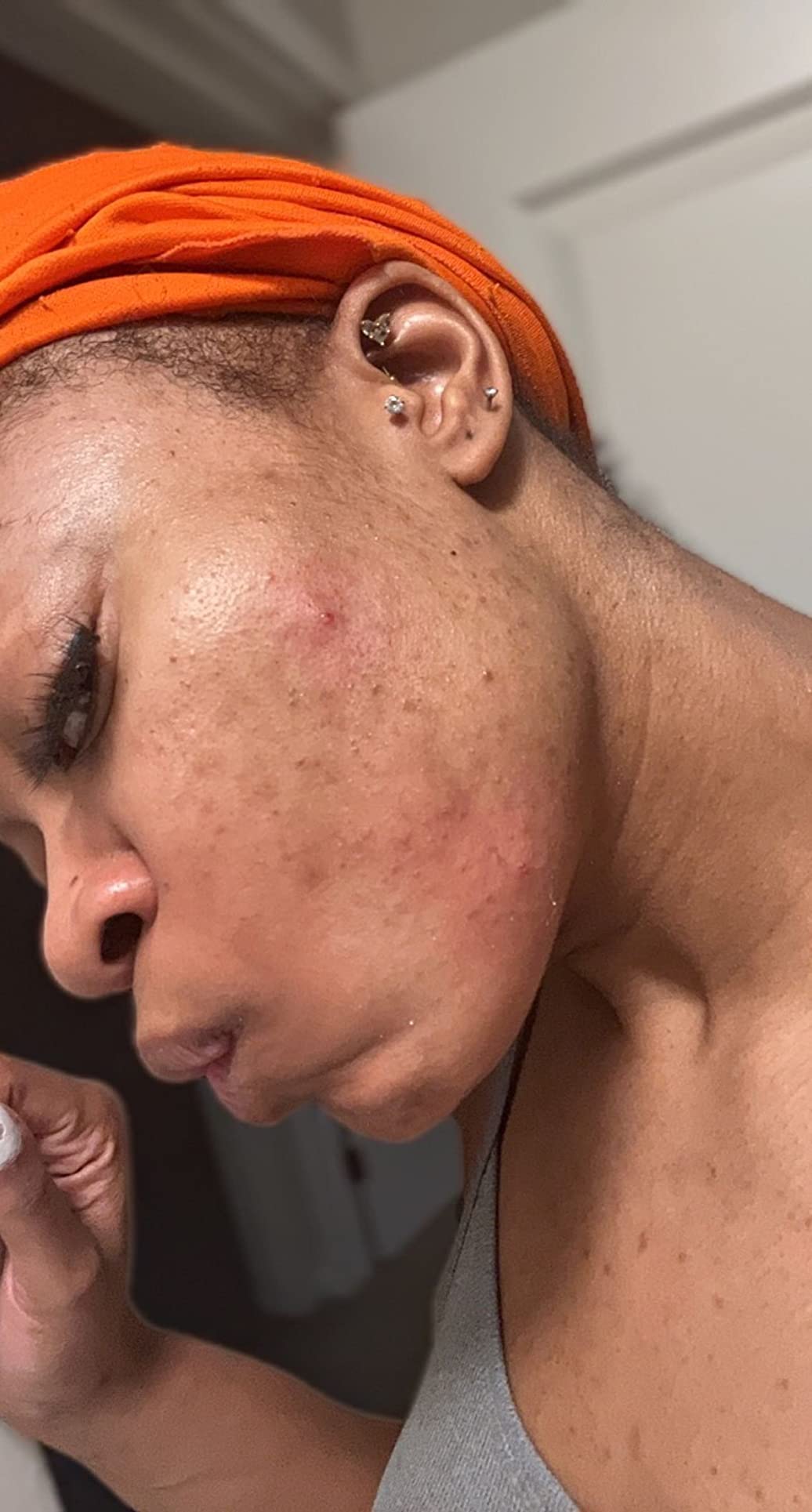
Here are some before and after photos of people who used turmeric soap to get rid of their acne:
These photos are from Aspen Kay Turmeric Soap.
Disclaimer: All photos are posted by real customers. I get a small commission when you buy the product from Amazon.
Before:


After:


But here’s where we need to look closer.
Why you shouldn’t use it:
Turmeric itself is beneficial, but the soap base it’s mixed into comes with its own set of challenges.
Most bar soaps, including turmeric soaps, have a pH around 9.
That might not mean much at first, but skin science tells a different story.
Our skin has what’s called an acid mantle, a thin protective layer that sits on the surface.
This barrier keeps moisture in and harmful bacteria out.
For the acid mantle to stay healthy, skin needs to remain slightly acidic, usually between 4.5 and 5.5 on the pH scale.
When you use something too alkaline—like a bar soap at pH 9—you risk disrupting that balance.
What does that disruption feel like?
For many people, it shows up as dryness, tightness, or flakiness after washing.
In others, it can weaken the skin barrier enough to cause irritation or even more breakouts.
Ironically, a product that’s supposed to fight acne might sometimes make it worse if it strips your skin too much.
That’s the catch with turmeric soap.
The turmeric in it is helpful, but the high pH of the soap base can counteract those benefits.
It doesn’t mean turmeric soap has no place in an acne routine—it just means you need to use it wisely.
So what’s the best way to do that?
What I suggest you do:
- One option is to use turmeric soap occasionally rather than every single day.
For example, you might use it a few times a week as a clarifying step, then rely on a gentle, pH-balanced cleanser for daily washing.
That way, you still get the antibacterial and oil-control benefits of turmeric without over-drying your skin.
2. Use a kojic acid-based facial wash instead.
If you want the benefits of a natural acne-fighting ingredient without the risk of disrupting your skin barrier, another option is to use a pH-balanced facial cleanser instead.
For example, a kojic acid facial wash can be a great choice.
A kojic acid face wash not only works at a skin-friendly pH, but it also helps fade dark spots, brighten uneven tone, and support clearer-looking skin over time.
This way, you still get an effective acne routine that soothes inflammation and fights bacteria, but you avoid the dryness and irritation that comes with bar soaps.
It’s also worth remembering that skincare works best when it’s part of a larger routine.
If you decide to use a turmeric soap, pairing it with a good moisturizer can help restore hydration and keep your skin barrier strong.
A lightweight, non-comedogenic moisturizer will prevent the dryness that sometimes comes with alkaline cleansers.
For those with sensitive or acne-prone skin, there are other ways to use turmeric without the high pH of soap.
Turmeric can be found in masks, serums, or cleansers that are formulated with a skin-friendly pH.
These options allow you to get turmeric’s anti-inflammatory and antibacterial benefits in a way that’s gentler and more sustainable for long-term use.
So, does turmeric soap help with acne?
The answer is yes, but with an important asterisk.


Leave a Reply