
The Dangers of Using Kojic Acid Soap
While kojic acid soap offers amazing benefits and usually safe to use, it’s crucial to be aware of potential risks to protect your skin and overall health.
Let’s break them down with examples to help you make informed choices.
1. Fake Soaps
Counterfeit kojic acid soaps are a significant problem in the skincare market.
These fake soaps often contain low or zero levels of kojic acid, substituting it with cheap, harmful chemicals.
For instance, some fake products use harsh bleaching agents like mercury, which can cause severe skin irritation and even long-term damage in addition to poisoning.
I once tried a cheap “kojic acid soap” I found online, and it caused my skin to break out in tiny, itchy bumps.
It wasn’t until I checked the label more carefully that I realized it didn’t even list kojic acid as an ingredient.
To avoid this, always check the packaging for proper branding, ingredient lists, and certifications.
For example, a genuine kojic acid soap might have clear details about its source, like “Made with natural kojic acid from fermented rice.”
Look for brands sold by verified retailers or websites. I compiled a list of verified authentic sellers here.
2. Incomplete or Unsafe Ingredients
Even some authentic-looking kojic acid soaps might not be well-formulated.
For example, a low-quality soap might skip essential ingredients like coconut oil which is necessary to create a stable, effective soap.
Without these, the soap might be too harsh, drying, or even unsafe for regular use.
A well-formulated kojic acid soap will usually include coconut oil for moisturizing, water for hydration, and sodium hydroxide for the saponification process that forms the bar.
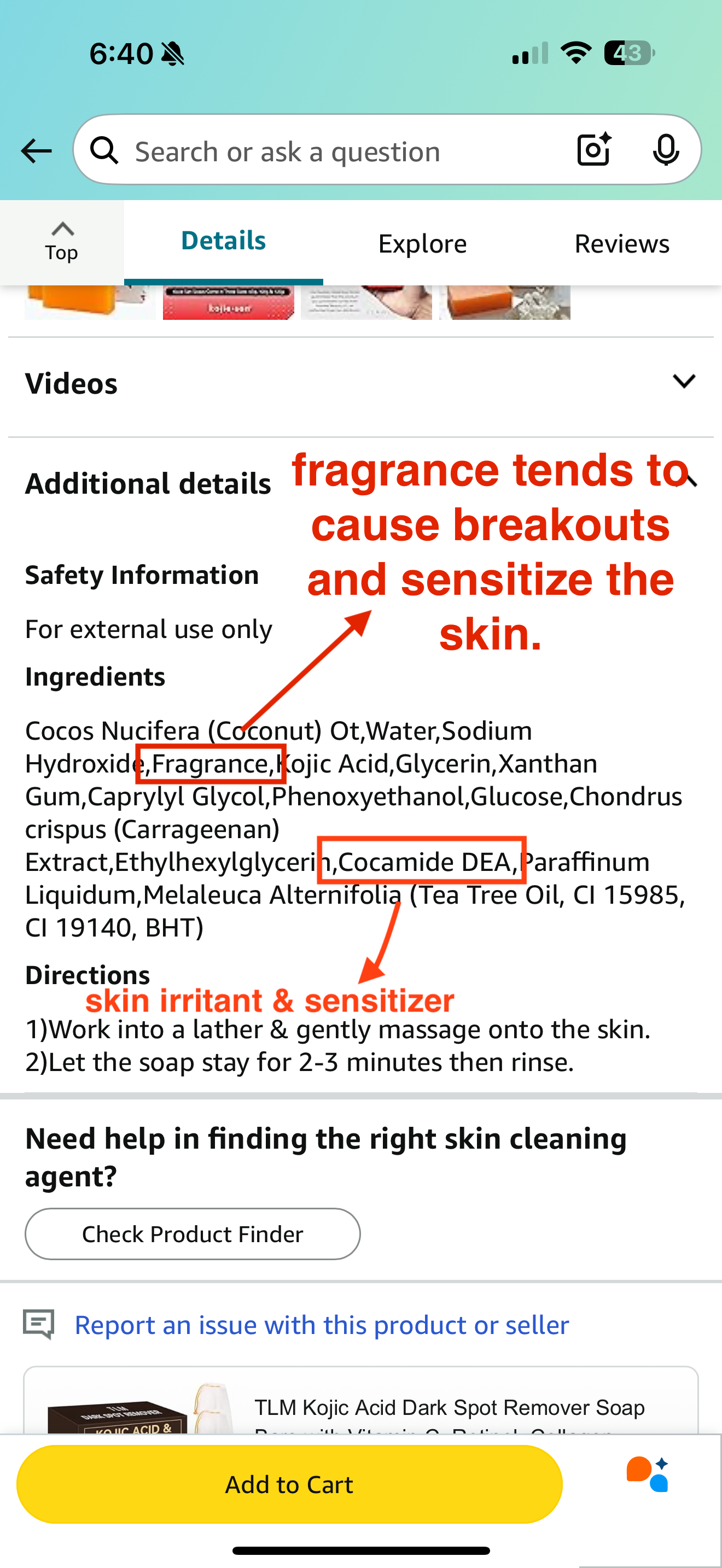
Here’s an example of a kojic soap that lists its complete ingredients.

If you come across a soap with vague or incomplete labeling and lists kojic acid as the number one ingredient, then that’s a red flag.
The top three ingredients that you must look for is coconut oil (or any kind of oil), water and sodium hydroxide.
These three ingredients are what’s needed to create bar soap.
Without these, there’s no soap.
Sometimes, it would also say “saponified coconut oil,” this basically means that water, sodium hydroxide and coconut oil have been mixed together. This is ok.
I’ve found that soaps made in the U.S. or from verified sellers often have stricter ingredient regulations.
For example, U.S.-based companies that sell kojic acid soaps must comply with FDA rules, ensuring transparency and safety.
3. Skin Irritation
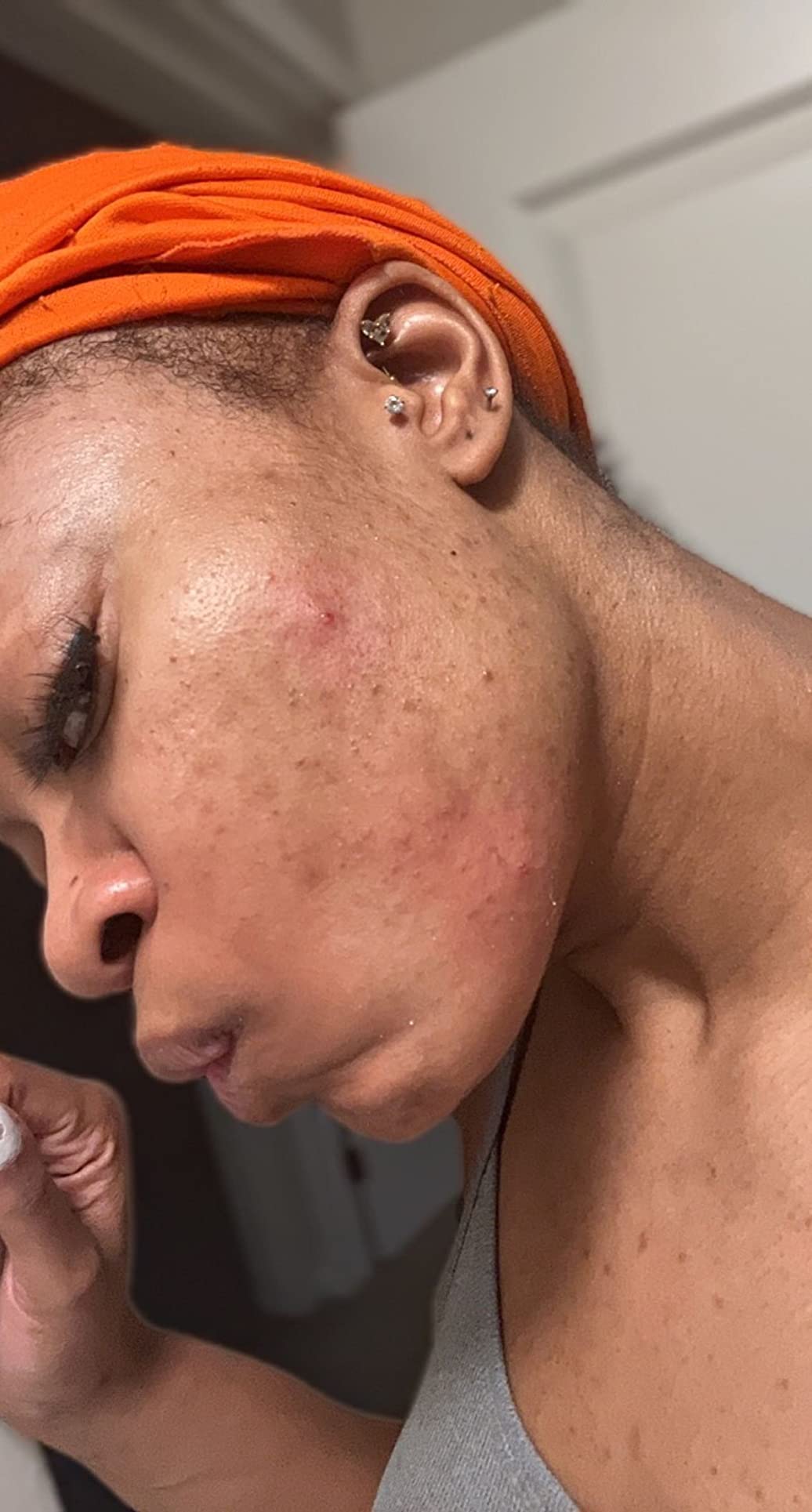
Even when using authentic kojic acid soap, skin irritation can happen, especially if it’s your first time.
Kojic acid is a powerful active ingredient, and while it’s effective, it can be drying or cause redness, stinging, or flaking.
For instance, I started with a strong kojic acid soap and left it on for five minutes, thinking it would work faster.
Big mistake—my skin felt tight and started peeling the next day.
I learned that starting slow is key.
If you’re a beginner, try leaving the soap on for 30 seconds to a minute and gradually increasing the time as your skin gets used to it.
Always follow up with a moisturizer.
For example, I use a fragrance-free cream with hyaluronic acid or aloe vera to restore hydration after washing with kojic acid soap.
If you have sensitive skin, use the soap every other day instead of daily to reduce the risk of irritation.
Severely dry or red skin could mean the soap is too strong for you, in which case it’s best to stop using it and consult a dermatologist.
How to Spot the Real Deal
To avoid these risks, stick to authentic, well-formulated kojic acid soaps.
For example, trusted brands often include transparent labeling with details like:
- “Contains 6% kojic acid” or “Dermatologist-tested.”
- A complete ingredient list starting with coconut oil, water, and sodium hydroxide.
- Buy from verified authentic sellers.
An example of a kojic acid soap that shows the percentage of active ingredients:

Avoid products with excessively strong scents—these are often signs of artificial additives and fragrance.
Conclusion
Yes, kojic acid soap is safe but you need to watch out for fake soaps, incomplete formulations, and overuse, you can safely enjoy the benefits of kojic acid soap.
Taking these precautions ensures that you’re investing in high-quality products that deliver real results without harming your skin.
Your skin deserves the best—make sure you’re giving it exactly that!


Leave a Reply